


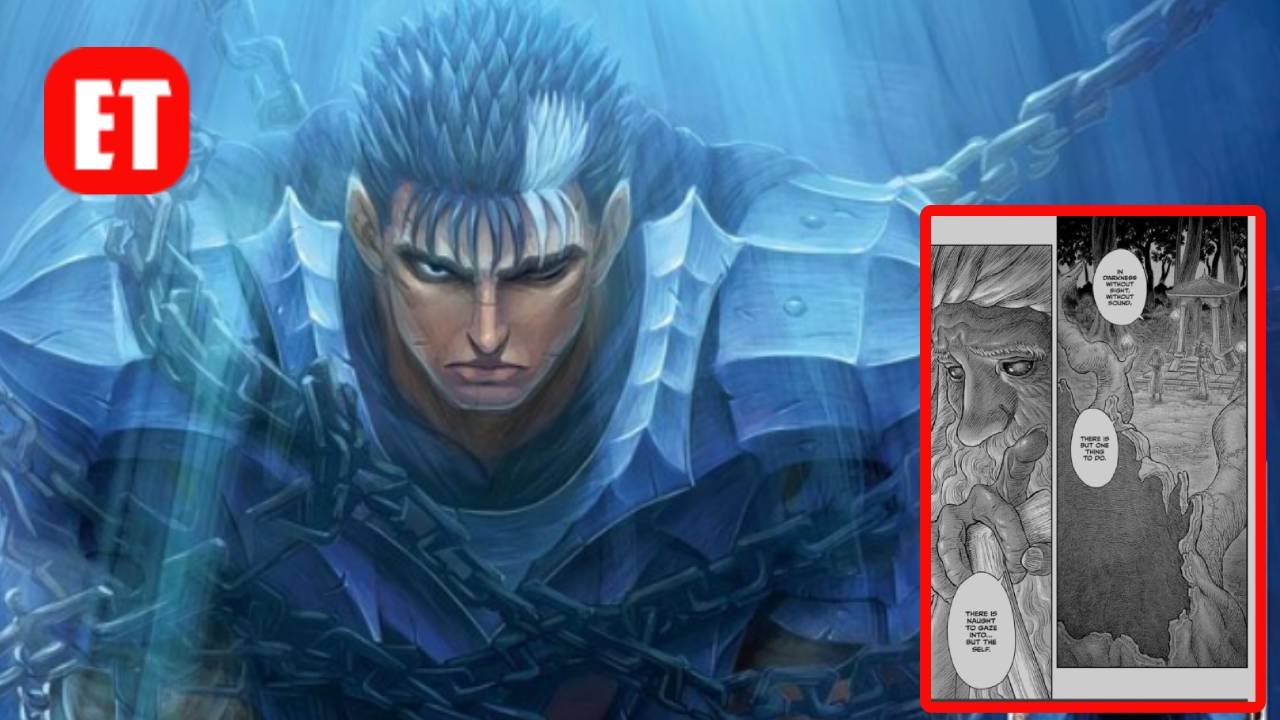
Few manga carry the weight of legacy, grief, and expectation quite like Berserk. With Kentaro Miura’s passing, every new chapter has become both a continuation and a careful act of preservation, handled by Studio Gaga and Kouji Mori. As the series moves deeper into its final arc, anticipation around Berserk Chapter 384 is unusually intense. The previous chapters have slowed the pace, turning inward and philosophical, focusing less on spectacle and more on Guts’ fractured psyche. That choice has divided readers, but it has also laid the groundwork for what may become one of the most important psychological turning points in the entire series.
Berserk Chapter 384 Release Date
Berserk Chapter 384 is expected to be released on or before 31 April 2026, though no official confirmation has been issued yet. As has become typical for the series, scheduling remains uncertain, and fans are once again relying on patterns rather than announcements. What is known, however, is the long-term roadmap. Volume 44 is officially scheduled for release in Japan in 2027, suggesting that over the next two years readers can expect roughly nine chapters in total. Current projections point to four or five chapters arriving in 2026, with the remaining chapters following in 2027. This slow but deliberate release cadence reflects the studio’s commitment to maintaining Miura’s tone and intent rather than rushing the story toward its conclusion.
While the lack of a fixed date may frustrate readers, it also signals that Chapter 384 is being treated as a critical narrative step rather than filler. The chapter is expected to continue directly from Guts’ psychological collapse following Griffith’s return and Casca’s removal, keeping the focus tightly on internal conflict rather than large-scale battles.
Recent imagery and dialogue reinforce this direction. One haunting scene shows an aged, almost priest-like figure standing within a forested shrine, uttering lines about darkness without sight or sound, and the need to gaze only into the self. The panel composition is quiet, oppressive, and symbolic, echoing Berserk’s long-standing fascination with introspection and fate. This moment does not feel like exposition; it feels like an invocation. The stupa-like setting evokes a spiritual threshold, a place where one confronts what lies beneath identity, rage, and despair.
This is where many readers believe Chapter 384 will shift from depression into transformation. Guts is no longer merely wounded or angry; he is emptied. His sword feels heavy not because of its weight, but because his will to swing it is gone. He has accepted death, or at least the inevitability of defeat. Ironically, this state may be the most dangerous one yet, because it leaves space for the Beast of Darkness to act without resistance.
From a thematic perspective, Berserk has always mirrored psychological theories long before fans explicitly named them. Carl Jung’s concept of individuation offers a striking lens through which to view the current arc. Individuation is the process of reconciling the shadow—the repressed, darker aspects of the self—with the conscious ego. Griffith’s path was one of surrender. He did not integrate his shadow; he allowed it to dominate him, becoming Femto. Power, ambition, and desire consumed whatever humanity remained.
Guts’ journey appears to be moving in the opposite direction. The Beast of Darkness is not an external demon but a manifestation of his trauma, rage, and survival instinct. Up to now, it has been purely destructive, pushing him toward self-annihilation under the guise of strength. Chapter 384 may finally confront the question Berserk has been asking for decades: can Guts live without hatred?
The prevailing theory suggests that Guts, in his current depressed state, cannot tame the Beast. His acceptance of death makes him vulnerable. The Beast may seize control completely, leading to an uncontrollable rampage that endangers both allies and enemies alike. This would not be a triumphant return to violence, but a tragic regression, showing the cost of unresolved trauma.

Yet Berserk has never been a story without human anchors, and Casca remains the most powerful one. Schierke’s earlier decision to seek Casca may pay off in Chapter 384, not through physical reunion, but through a spiritual intervention. The idea of Casca entering the stupa in a metaphysical or astral form aligns perfectly with the series’ established magic system and symbolism. Her words, unlike anyone else’s, have the potential to pierce through the Beast’s singular hatred for Griffith.
If this confrontation happens, it would not be about suppressing the Beast, but transforming it. The theory argues that the Beast of Darkness will merge with Guts rather than be destroyed, becoming a controlled, productive force. This would mark true individuation: Guts accepting his rage, pain, and desire for vengeance without being ruled by them. The result would be a warrior who fights not out of fury, but out of clarity.
Such a transformation also reframes the final confrontation with Griffith. When Guts first defeated him, it was not driven by hatred. His mind was clear, almost detached. The same clarity defined Rickert when he slapped Griffith, an act of pure moral rejection rather than violence. Chapter 384 may represent a “reverse eclipse,” a rebirth rather than a damnation. A new Guts, forged not by anger but by understanding, may finally possess the mindset required to truly wound Griffith.
If this is the path the story takes, Chapter 384 will not be remembered for action, but for resolution. It would signal the beginning of the end, not through escalation, but through inner peace. In a series defined by suffering, that may be the most radical development of all.

Erime Editor is the official editorial account of ErimeToday. Articles published under this name are created, reviewed, and managed by the ErimeToday editorial team to deliver helpful guides, technology tips, relationship advice, daily accurate word game answers, anime updates, gaming content, manga insights, news, and useful resources for readers around the world.





2 replies on “Berserk Chapter 384 Release Date, Spoilers, and Theory”
berserk is a disgrace no chapter in 203 days what tf
Hahaha, the teams are working hard on these chapters and future chapters, in my opinion.